Brought-in rear speaker DSP amplifier control deck return wiring
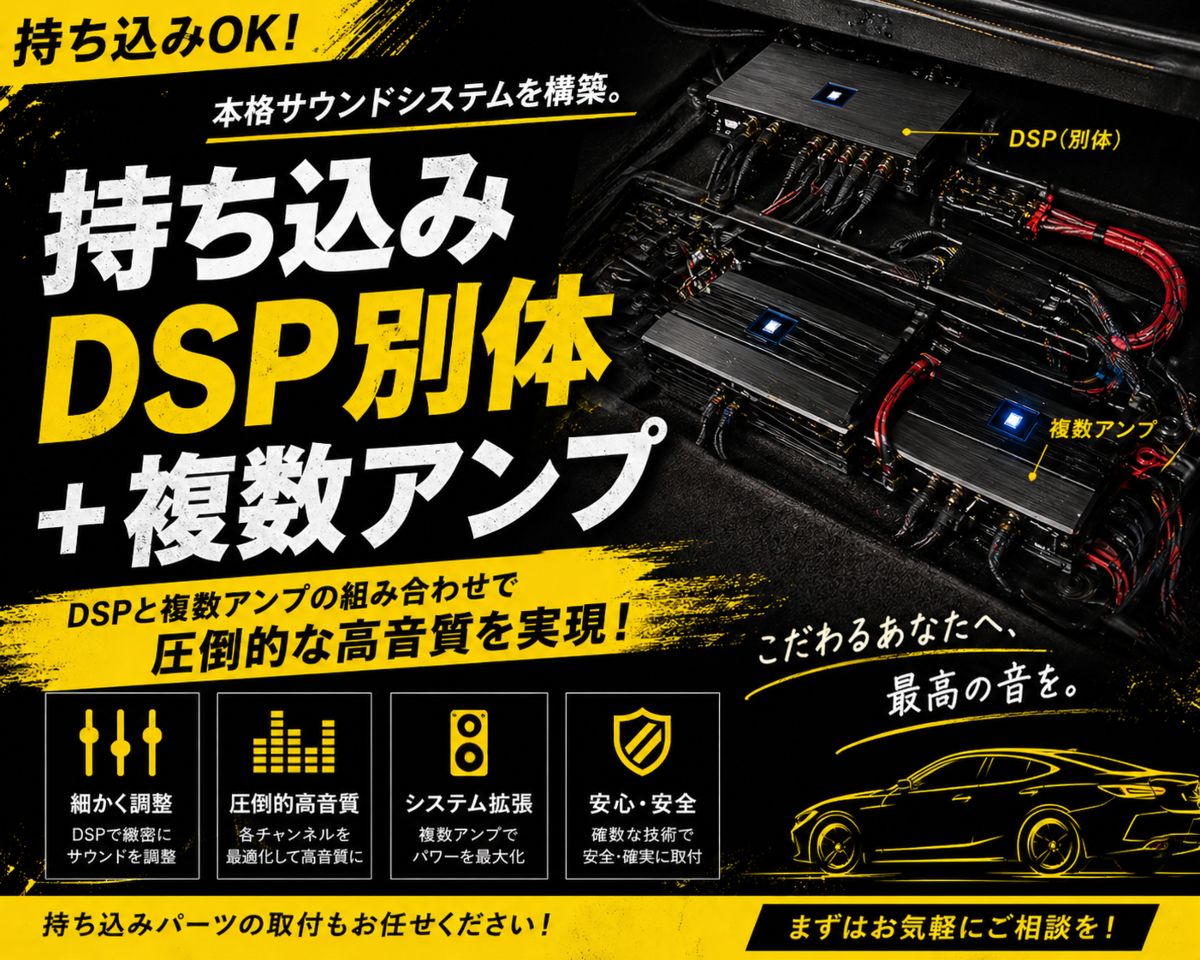
Wiring installation for sound creation that makes the most of rear speakers and a DSP amplifier.
【Deck Return Wiring Installation to Control Rear Speakers with a Brought-In DSP Amplifier】
I want to control the rear speakers with a DSP amplifier.
However, it can be difficult to understand how it connects to the factory head unit and your current system, and many people probably worry about where to pull the signal from and how to route it back.
In this installation, we use the DSP amplifier you bring in, and while confirming the signal flow—including the rear speakers—we assemble the deck return wiring.
To Make the Rear Speakers Sound Naturally Right
Car audio isn’t simply about getting sound out of the rear speakers.
Do you want to shape the rear sound while keeping the front soundstage important? Or do you want to make it easier to listen to music from the back seat? Or do you want to expand your system while leveraging what you already have? Depending on the goal, the wiring and how the DSP amplifier is used will change.
By setting things up so you can adjust the rear speaker volume and balance, it becomes easier to fine-tune while keeping the overall coherence of the cabin in mind. This is also an installation worth considering for people who often have passengers in the back seat.
Pre-Checks Are Important for Installing Brought-In Equipment
When using a brought-in DSP amplifier, just because the unit is available doesn’t mean it can be connected as-is.
The required work can vary depending on the currently installed head unit and amplifiers, the configuration of the factory system, how the signal is extracted, and the condition of the power and speaker wiring.
On vehicles that already have aftermarket components installed, you should first check what was done in the previous installation, then separate the parts that can be reused as-is from the parts that should be reviewed.
If you push ahead with only making the connections, it can lead to issues such as noise, an awkward feel in operability, and difficulty in making adjustments. It’s safer not to decide everything by email alone—please confirm the actual vehicle and the equipment first.
We Consider Not Only the Installation, but Also Ease of Use After Completion
Wiring may be something you don’t normally see, but it’s an important part that affects system stability and how much room you’ll have for future adjustments.
At Logon, we don’t install brought-in equipment with the goal of “just mounting it.” Instead, we consider:
- How it connects with your current system
- Impact on factory functions and usability
- Neat organization of wiring and maintainability
- Cohesion of the sound, including the rear speakers
- How easy it is to change or adjust the system in the future
While checking these points, we’ll think through the best approach for your vehicle.
Even with the same DSP amplifier, where and how it’s integrated will change how easy it is to use and how easy it is to adjust. If it were me, I wouldn’t give vague guidance that might change later—I’d first look at the actual vehicle and equipment, then sort out what we can do and methods that are not recommended.
Recommended for People Like These
- You want to control the rear speakers using a brought-in DSP amplifier
- You want to keep using your current factory head unit and existing system
- You want to maintain a front-centered soundstage and also properly tune the rear
- You want to be able to listen to music comfortably even in the back seat
- You want to reorganize the wiring at least once, including any previous installation work
- You want to consult about post-install adjustments and day-to-day usability
Even if you’re considering a brought-in installation, you don’t need to decide the full configuration in advance. We’ll organize it into a reasonable plan while confirming the vehicle model, current installed status, the equipment you bring in, and your sound preferences and intended use.
DSP control for rear speakers and deck return wiring aren’t flashy tasks, but they affect the overall final outcome of the entire system. If you want it built in properly, let’s decide the direction together while taking a look at the actual vehicle.
■ Installation Details
- Integration of the brought-in DSP amplifier
- Checking the wiring needed to control the rear speakers
- Deck return wiring
- Verifying connections with the existing system
- Post-install operation check and adjustment consultations as needed
The actual installation details will vary depending on the vehicle model, factory system, existing installed condition, and the specifications of the brought-in equipment. We’ll provide accurate installation methods and costs after checking the actual vehicle and the equipment.