Readjustment (External deck installed by our shop)
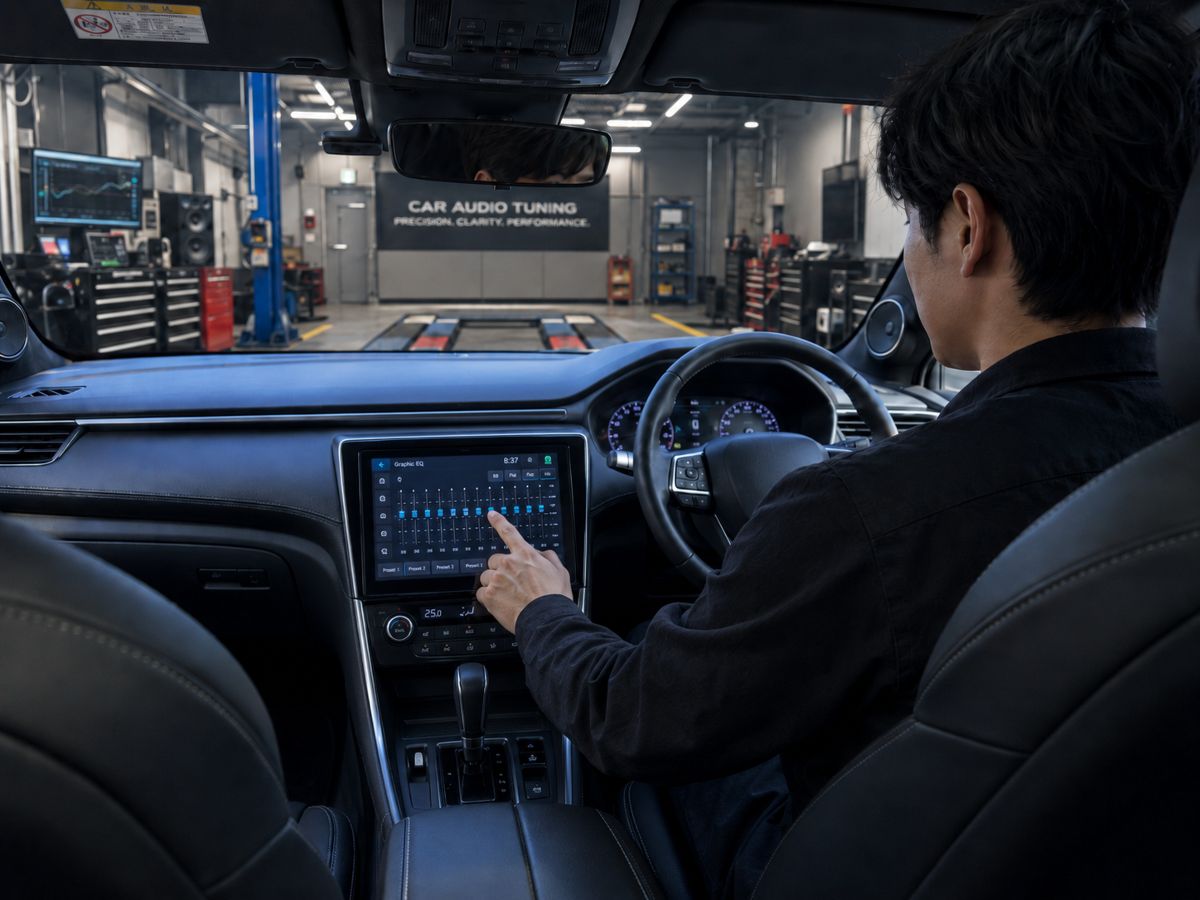
Get your aftermarket deck installed at our shop matched to your current vehicle—so you can enjoy that great sound again.
【DSP Re-Tuning After Another Shop’s Installation|A Logon Original Menu to Refine Sound While Making Use of Your Current System】
You’ve installed a DSP, but the sound isn’t quite what you expected.
The vocals sound too far away, the bass doesn’t feel cohesive, you’re concerned about the left-right balance, the volume makes you feel tired, and even after installing a DSP you can’t easily feel its benefits. When that happens, what you may want to revisit is DSP re-tuning.
Even for systems installed at another shop, we’ll first check your current equipment, speaker configuration, and the in-car environment—then adjust while being honest about what can realistically be improved. Installing a DSP alone is not “done” once it’s mounted. The final result changes greatly depending on in-car reflections, speaker placement, the music you normally listen to, and the direction of sound you prefer. Before you immediately replace your current equipment, it’s worth seeing how much you can change through tuning first.
We’ll sort out the discomfort you’re feeling with your current sound, one by one
During DSP tuning, we review settings such as time alignment, crossover, equalization, and level balance to shape a sound that feels natural inside the cabin.
For example, if the vocal position doesn’t seem to settle, we check the left-right connection and distance impression. If the bass feels bloated, we check how it connects with the subwoofer and door speakers. If the sound feels harsh, we confirm the frequency-band balance and how the system is being driven.
At Logon, our approach is to tune toward a sound that’s easy to enjoy every day—rather than something that just sounds flashy—so you can truly enjoy your favorite songs again.
Even after installation by another shop, it starts with checking the current state
The range of what we can handle with DSP re-tuning after another shop’s installation depends on the installed equipment and wiring condition, the way the speakers are mounted, and your current settings.
There are cases where improvement can be achieved through tuning alone. And if things like installation, wiring, or how firmly the speakers are fixed are affecting the sound, other work may be necessary.
We won’t leave it vague. We’ll tell you after checking the vehicle in person.
By separating what will improve through tuning from what should be reviewed from the installation side, it becomes easier to avoid unnecessary replacements or detours.
With DSP, the impression changes more by the “how you align it” than by the equipment itself
Even with the same DSP and the same speakers, the sound impression can change dramatically depending on the tuning approach.
Do you want the vocals to come forward? Do you want to prioritize the thickness of the bass? Or do you want a sound that’s less fatiguing even on long drives? There isn’t just one correct answer—it depends on how each customer listens.
At Logon, we don’t judge based only on the equipment’s performance. While confirming your vehicle model, system configuration, the music you typically listen to, and your preferences, we tune in a direction that brings out the strengths your current system already has.
This is a menu suited to people who want to make use of the audio they already have, and also to those who want to thoroughly re-check the sound before considering a replacement.
Recommended for people like this
- You have a DSP installed, but it’s hard to feel the sound is cohesive
- You’re concerned about vocal positioning or left-right balance
- The bass feels too strong or too thin
- When you raise the volume it becomes harsh, or you get tired after listening for a long time
- You want to have the sound after another shop’s installation checked by a specialist shop
- Before replacing equipment, you want to know what you can do with your current system
DSP re-tuning isn’t just a matter of tweaking numbers.
It’s a process of listening to the sound that’s currently playing, looking at the car’s condition, and finishing by matching it with your preferences.
No matter which shop installed it originally, please don’t worry about that—first, tell us what bothers you about the sound right now.
We’ll sort it out together, including what we can do, what may be difficult, and—if needed—what points you should review next.